Everything BotRank does for your AI visibility
BotRank.ai is a GEO platform that measures and improves a brand's visibility in AI answer engines: ChatGPT, Google AI Overviews and AI Mode, Gemini, Perplexity, Microsoft Copilot, Mistral, Grok and Claude. It covers ten modules, from choosing the prompts you want to be found on, through to executing the optimisation work and measuring its impact.
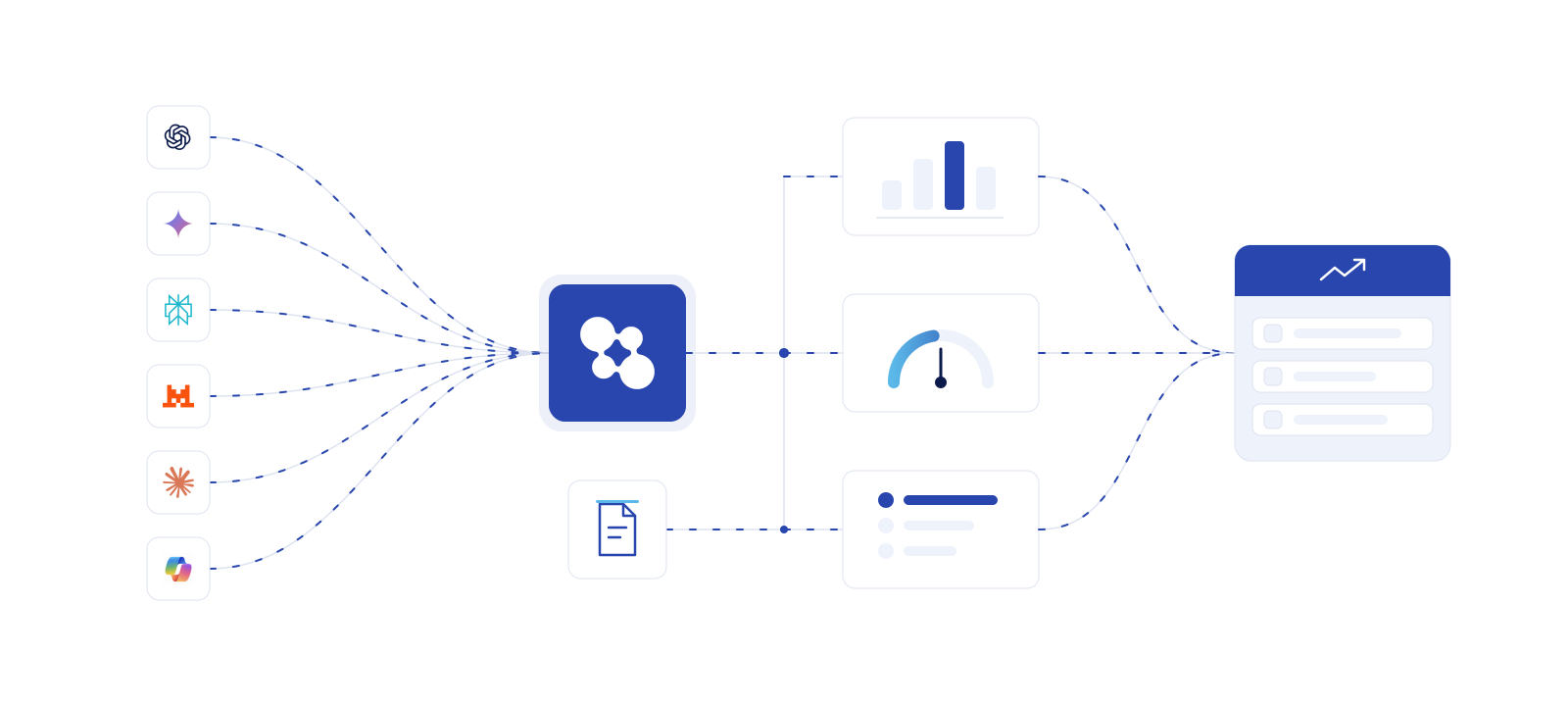
Every module below runs on the same data: the prompts you track, the answers collected every day from the engines' own interfaces rather than from APIs alone, and the pages those answers cite.
Measure what AI engines actually show
Prompt Studio
Identify and prioritise the questions your buyers actually ask AI engines, generated from real SEO search volumes. You decide which prompts you want to be found on, market by market and entity by entity.
Discover Prompt StudioVisibility analysis
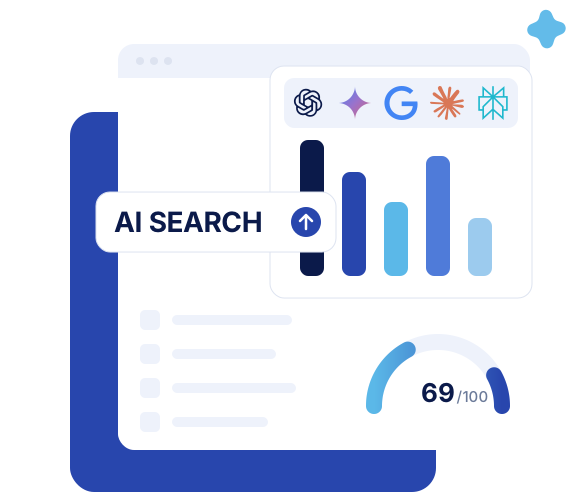
Daily tracking of your mentions, your position and your share of voice against competitors across every AI engine. Data is collected from the engines' interfaces, so it reflects what users really see.
Discover visibility analysisAI Shopping
See which products win shelf space in AI shopping carousels: presence, average rank, win rate, the merchants selling them and the prices displayed. Built for brands whose category is shifting to AI-assisted buying.
Discover AI ShoppingUnderstand why you win or lose
Perception and sentiment
Beyond whether you are cited: how AI engines describe you. Sentiment of each mention, the topics attached to your brand, and the sources that shape that perception.
Discover perception and sentimentSource analysis
The media, forums and websites that feed AI answers on your market, ranked by influence. It tells you where to invest in PR, partnerships and link building instead of guessing.
Discover source analysisTechnical GEO audits
A crawler that reads your pages the way an AI engine does and scores them on 24 criteria across technical, structure, content and authority, with a score out of 100 and prioritised fixes.
Discover technical auditsAct, and measure the impact
Bob, the integrated GEO agent
Connected to your account in real time, Bob interprets your data, defines your prompts, drafts optimised content and produces ready-to-use technical code. He is included in every plan.
Meet BobRecommendations & roadmap
Prioritized tasks generated automatically from your own data, with a weekly email digest, then a collaborative Kanban to assign them, execute them and plot completed work against your visibility charts.
Discover recommendations & roadmapMCP and API
An MCP server and an API to pipe your AI visibility data into Claude, Cursor, n8n, Zapier, Looker Studio, GA4 and Search Console: white-label reports, Slack alerts on lost citations, and your own automations.
Discover MCP and APIFrequently asked questions
Which AI engines does BotRank track?
ChatGPT, Google AI Overviews and AI Mode, Gemini, Perplexity, Microsoft Copilot, Mistral, Grok and Claude. The engines covered depend on your plan, and answers are collected from their interfaces so they match what a real user sees.
Are all features included in every plan?
The analysis modules and Bob are available on every plan, with basic agent access on Starter. What changes between plans is volume: tracked entities, custom prompts per month, pages scanned and AI engines covered.
Do I need a developer to use BotRank?
No. Audits, recommendations and the roadmap are built for marketing teams, and Bob writes the technical code when a fix requires it. A developer is only needed to apply changes to the site itself, or to connect the API.
How is GEO different from SEO?
SEO optimises for ranking in a list of links. GEO optimises for being understood, cited and recommended inside a generated answer. Most SEO fundamentals still apply, but the measurement, the priorities and the sources that matter are different.
How long before results show?
Technical fixes are usually picked up within a few weeks. Content and authority work takes longer, with documented recovery windows of roughly five to twelve weeks before citations move. The roadmap plots completed tasks against your visibility curves so you can see that lag on your own data.